
About Dr. Tina Vitolo
Hi! I am Dr. Tina Vitolo. I am a licensed clinical social worker and I have my doctorate in social work. My dissertation researched the impact of complementary and alternative interventions in clinical social work practice.
About Dr. Tina Vitolo
Hi! I am Dr. Tina Vitolo. I am a licensed clinical social worker and I have my doctorate in social work. My dissertation researched the impact of complementary and alternative interventions in clinical social work practice.
About Dr. Tina Vitolo
Hi! I am Dr. Tina Vitolo. I am a licensed clinical social worker and I have my doctorate in social work. My dissertation researched the impact of complementary and alternative interventions in clinical social work practice.
 THE BLACK SHEEP THERAPIST®
THE BLACK SHEEP THERAPIST®
THE BLACK SHEEP THERAPIST®
THE BLACK SHEEP THERAPIST®
THE BLACK SHEEP THERAPIST®
THE BLACK SHEEP THERAPIST®
THE BLACK SHEEP THERAPIST®
THE BLACK SHEEP THERAPIST®
THE BLACK SHEEP THERAPIST®
THE BLACK SHEEP THERAPIST®
THE BLACK SHEEP THERAPIST®
THE BLACK SHEEP THERAPIST®
THE BLACK SHEEP THERAPIST®
THE BLACK SHEEP THERAPIST®
THE BLACK SHEEP THERAPIST®
THE BLACK SHEEP THERAPIST®
THE BLACK SHEEP THERAPIST®
THE BLACK SHEEP THERAPIST®
THE BLACK SHEEP THERAPIST®
THE BLACK SHEEP THERAPIST®
THE BLACK SHEEP THERAPIST®

I’m Dr. Tina Vitolo, LCSW, DSW, a licensed clinical social worker, rebel educator, and the founder of The Black Sheep Therapist®.
I work with therapists who never quite fit inside the box they were trained for, clinicians who integrate somatic, intuitive, spiritual, or unconventional approaches and want to do so ethically, transparently, and without fear.
This work didn’t come from a trend.
It came from lived experience and years of trying to reconcile who I was with what the system allowed.

Where This All Started
When I entered the mental health field, I did everything “right.”
I went to grad school.
I followed the rules.
I worked in agencies and clinical settings.
And privately? I was anxious, dysregulated, and disconnected from myself, trying to teach clients skills I hadn’t yet learned how to embody.
Conventional therapy helped in some ways.
But it also taught me how to cope, compartmentalize, and suppress, not how to feel whole.
At the same time, I was deeply intuitive, sensitive, and attuned. I felt more than I could explain. And there was no place in my formal training where that part of me belonged.
So I did what many therapists do.
I split myself in two.
Living Between Two Worlds
Outside the therapy room, I found healing spaces where intuition, spirituality, and embodiment were welcomed.
Inside the professional world, those same tools were dismissed, minimized, or labeled “unethical,” often without explanation.
What became clear was this:
Both worlds had something essential.
And neither knew how to talk to the other.
I didn’t want to abandon clinical work.
And I didn’t want to abandon the parts of myself that made healing possible.
I wanted integration, but no one could show me how to do it ethically and legally.
The Question That Changed Everything
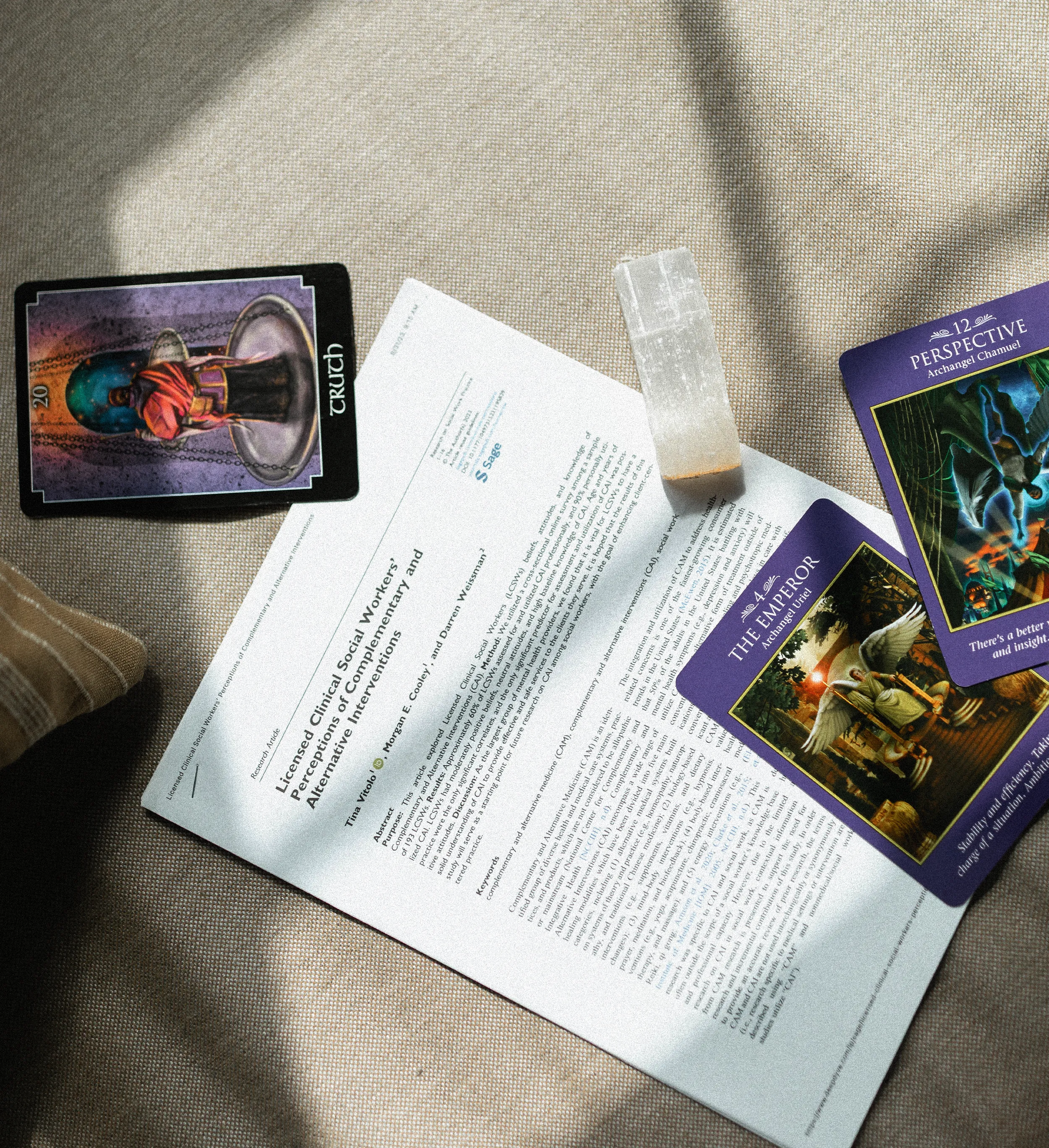
After completing my doctorate and conducting research on complementary and alternative interventions in mental health, I still faced the same question:
How do I actually integrate this work into therapy, legally and ethically, without risking my license?
There were no clear answers.
Boards were vague.
Templates didn’t fit.
Colleagues were just as unsure.
So I stopped asking for permission and started doing the work myself.
What I Did Instead
I immersed myself in:
State statutes and administrative codes
Ethics standards across professions
Malpractice and liability interpretation
Clinical theory and scope of practice
I consulted malpractice attorneys.
I stress-tested my language.
I documented everything.
Eventually, I built what I couldn’t find:
a clear, defensible framework that translates integrative work into language boards, insurers, and peers understand, without stripping it of meaning.
That framework became the foundation of everything I teach today.

Why The Black Sheep Therapist® Exists
The Black Sheep Therapist® was created for clinicians who don’t want to choose between:
Being ethical or being authentic
Being clinical or being intuitive
Staying licensed or practicing in alignment
You don’t need to leave the field to do this work.
You need clarity, structure, and language.
I teach therapists how to:
Ground unconventional practices in clinical theory
Create documentation that reflects real practice
Speak confidently about what they do, without over-explaining or hiding
Practice with integrity instead of fear
This isn’t about rebellion for rebellion’s sake.
It’s about responsibility, transparency, and evolution.
What I Believe
I believe:
Ethics are not about playing small
Vagueness in the system is not a dead end; it’s an invitation for clarity
Integration is a skill that was never taught, not a flaw in the therapist
The future of mental health depends on clinicians who can bridge science and soul
The field doesn’t need more therapists who shrink to stay safe.
It needs practitioners who know how to stand firmly in their work.
Where I Am Now
Today, I support therapists through:
Education and training
Framework development
Ethical integration guidance
Community and mentorship
I don’t tell therapists what to believe or how to practice.
I help them articulate, defend, and own the way they already work.
Where I Am Now
Today, I support therapists through:
Education and training
Framework development
Ethical integration guidance
Community and mentorship
I don’t tell therapists what to believe or how to practice.
I help them articulate, defend, and own the way they already work.
If You’ve Ever Felt Like the System Wasn’t Built for You
You’re probably right.
But you don’t have to leave it to change how you practice inside it.
“Freedom in practice doesn’t come from breaking rules. It comes from understanding them well enough to move with clarity.”
— Dr. Tina Vitolo